ASI CoC Material Flows 2025: What the latest data tell us about material uptake
ASI’s latest Chain of Custody Material Flows data show a growing network of CoC Certified Entities, alongside a more mixed picture for material flows.
28 September 2026
The number of CoC Certified Entities continued to grow. Twenty-two new CoC Certifications were issued in 2025, compared with 23 in 2024, and 19 in 2023. The new Certifications included 12 additional downstream companies, five recyclers, two refiners, two smelters with casthouses, and one producer with operations spanning refining through downstream activities. This continued interest in certification contrasts with the reduction in reported material flows and highlights an important distinction between being CoC Certified and actively sourcing and producing CoC Material.
In global production, using IAI’s material flow modelling, in 2025, ASI Performance and Chain of Custody Certified Entities produced ASI CoC Material equivalent to approximately 21% of global bauxite, 14% of alumina, 6% of primary aluminium and 1% of semi-fabricated products. Eligible Scrap sourced represented approximately 1% of global pre-consumer scrap and 4% of post-consumer scrap, while ASI Aluminium represented approximately 1% of the aluminium used in manufactured goods. These shares were lower than in 2024 across the reported categories (see details below under each supply chain stage).
The visualisation is now available on the updated CoC Material Flows diagram.
Looking beyond the global share, Entity sourcing shows that low uptake of ASI Material across certification scope has remained a consistent feature of the CoC system. In 2025, 51 (45%) of the 114 reporting Entities reported no ASI Material input across their scope, while a further 14 (12%) reported ASI Material inputs of between 1% and 10% (see figure 1). Together, 57% of reporting Entities sourced ASI Material equivalent to 10% or less across their certification scope. This is consistent with 2024, when 42% of reporting Entities reported no ASI Material input with the share at 10% or below at 55%.
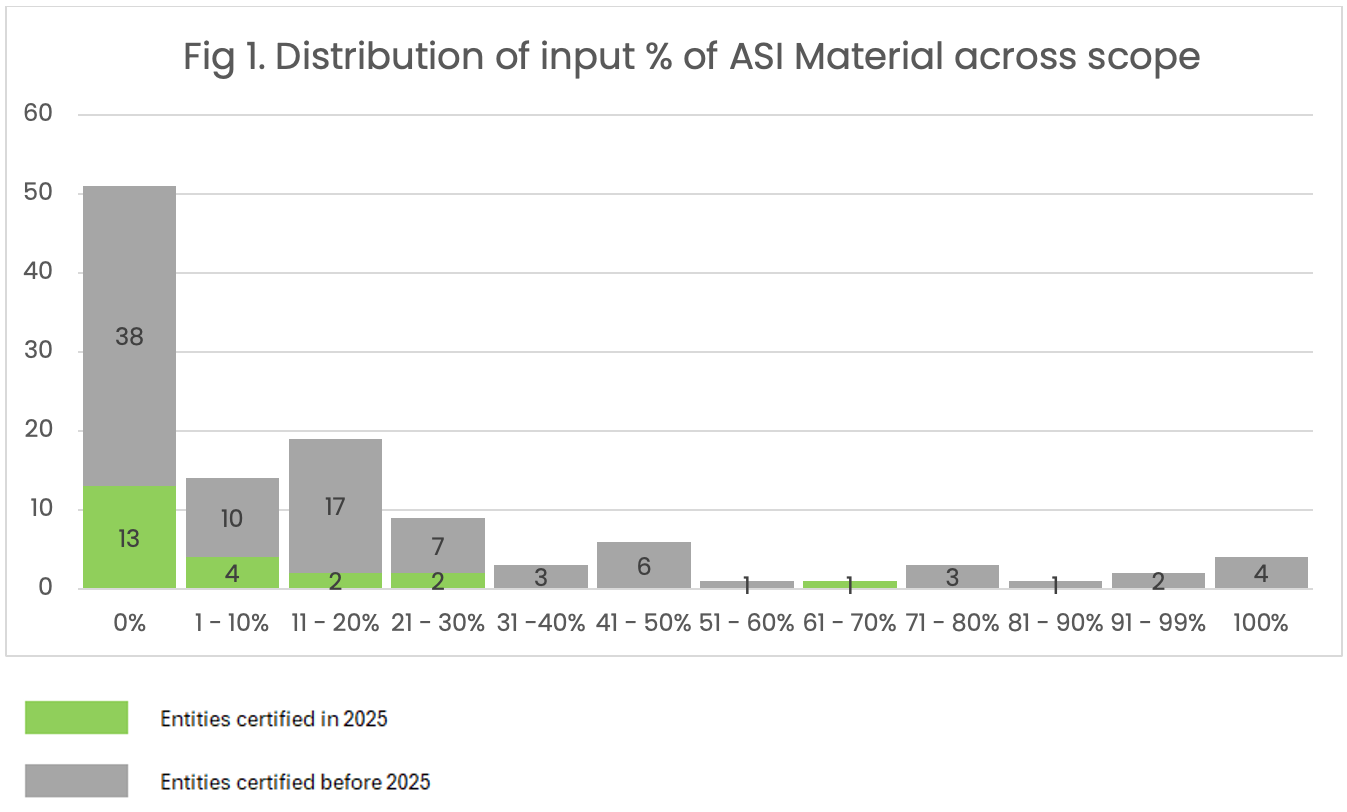
Fig 1. Distribution of input % of ASI Material across scope in 2025. Green – Entities certified in 2025; grey Entities certified before 2025.
Zero sourcing of ASI Material is not limited to newly certified Entities: 38 (33%) Entities certified before 2025 reported no ASI Material input across their scope. This shows that the gap between certification and material uptake is not attributed only to new certifications.
At the same time, some Certified Entities sourced ASI Material at much higher levels, with inputs approaching or reaching 100% of their certification scope. The 2025 data therefore illustrates a wide spread of how CoC Certification translates into physical material flows across the aluminium value chain.
Looking together at the global material flow percentages and Entity level sourcing data shows that the reach of CoC Certification continues to expand, however the use of CoC Material within certified operations does not expand at the same rate.
Bauxite Production
Bauxite production from CoC Certified mines remained stable in volume in 2025. However, ASI CoC bauxite represented approximately 21% of estimated global bauxite production, compared with 26% in 2024.
The difference between reported CoC volumes and a lower global percentage should be interpreted in the context of how much of alumina produced from that bauxite is actually transferred as CoC material to smelters. Production of ASI CoC bauxite does not necessarily translate into equivalent flows further along the CoC supply chain. The volume of CoC Material going to further stages depends on how much eligible material is transferred and reported as CoC Material between Certified Entities. This distinction becomes visible at the alumina stage, where reported CoC flows declined in 2025.
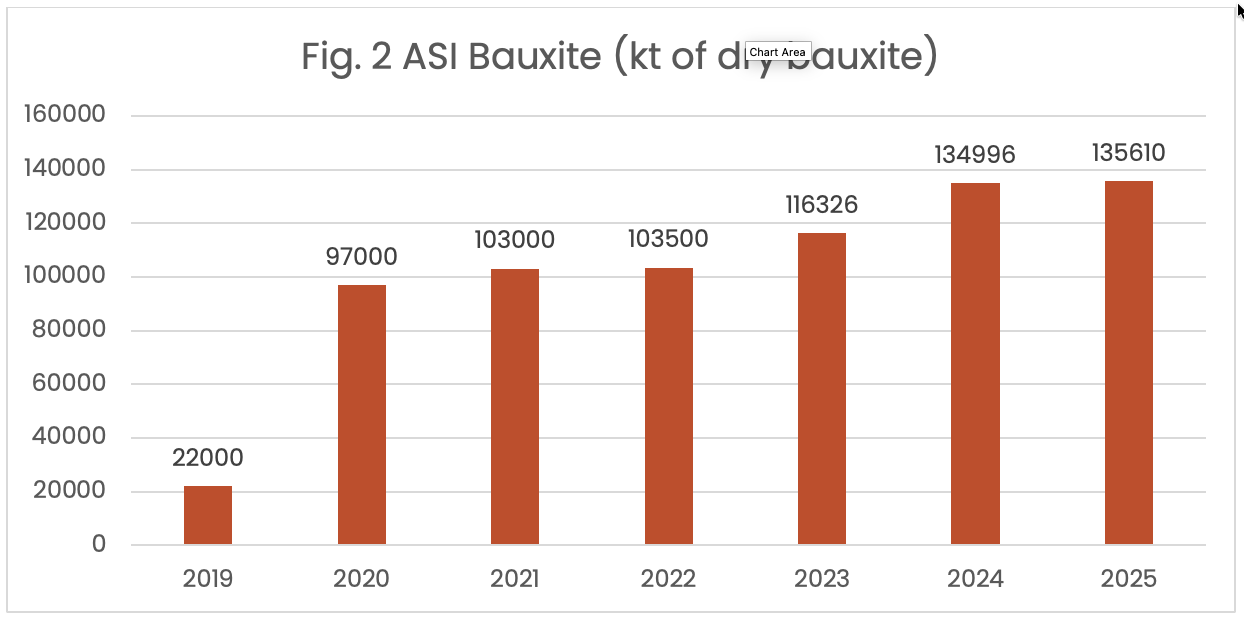
Figure 2: Bauxite production from CoC Certified Entities remained stable in 2025.
Alumina Production
ASI Alumina flows decreased again in 2025, continuing the decline observed following the peak in reported volumes in 2021. ASI CoC Alumina represented approximately 14% of global alumina production, down from 17% in 2024.
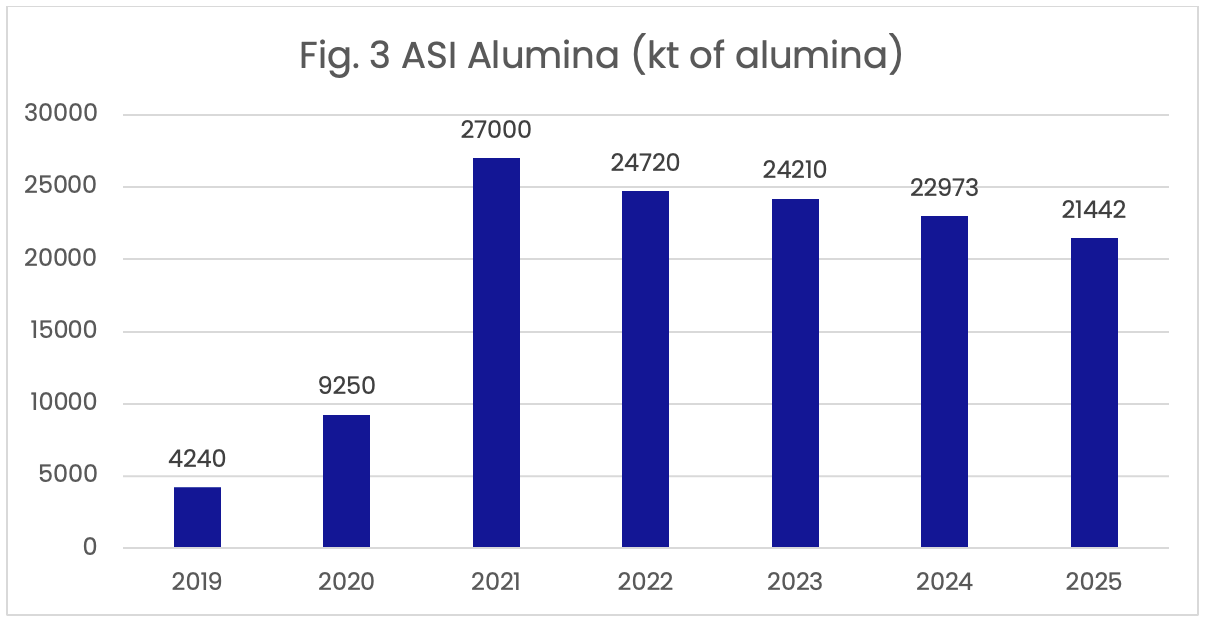
Figure 3: ASI Alumina flows decreased in 2025, continuing the decline from their 2021 peak.
Primary Aluminium Production
Flows of ASI Primary Aluminium also decreased in 2025, reversing the growth visible in previous years. The global share dropped down from 8% to 6%.
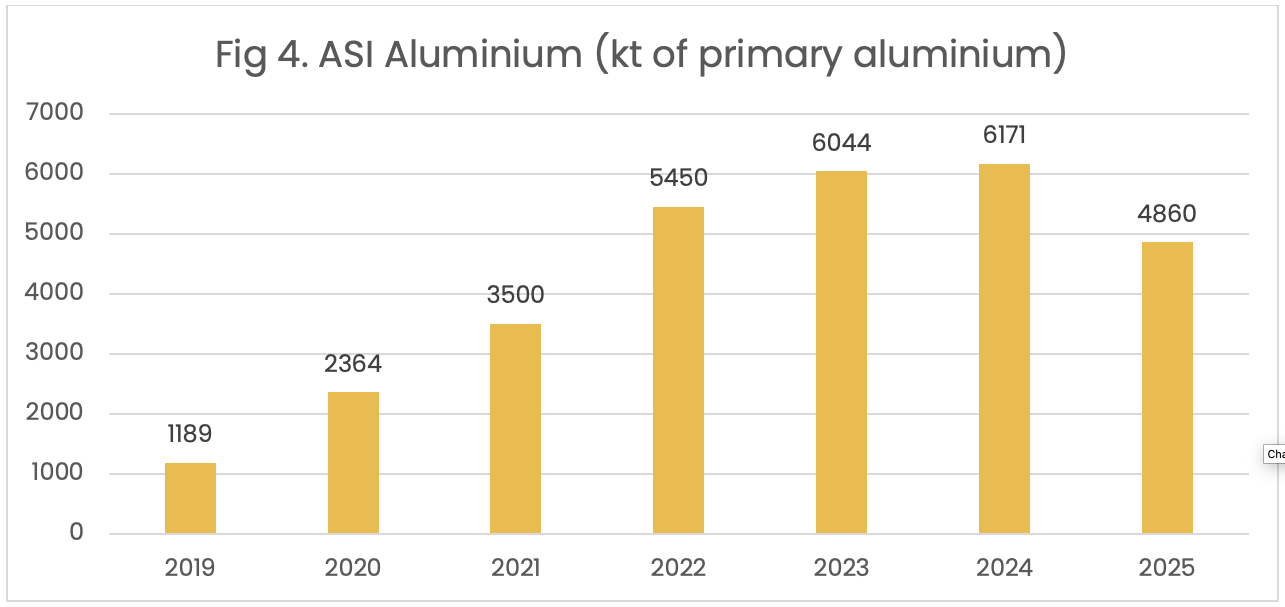
Figure 4: Flows of ASI Primary Aluminium decreased in 2025 following growth in previous years.
Scrap Flows
Both Pre-Consumer and Post-Consumer Eligible Scrap flows decreased in 2025. This represents a significant change from 2024, when Eligible Scrap inputs increased more than threefold and Post-Consumer Scrap alone reached 4,525 kt.
In 2025, Eligible Scrap sourced by CoC Certified Entities represented approximately 1% of estimated global pre-consumer scrap and 4% of post-consumer scrap, compared with 2% and 18%, respectively, in 2024. The reduction in post-consumer scrap is therefore one of the biggest changes in 2025.
As in previous years, Pre-Consumer Scrap generated and remelted within the same Entity remains within the Entity’s closed loop and is not required to be reported under the CoC Standard. These volumes are therefore not included in the material-flow visualisation.
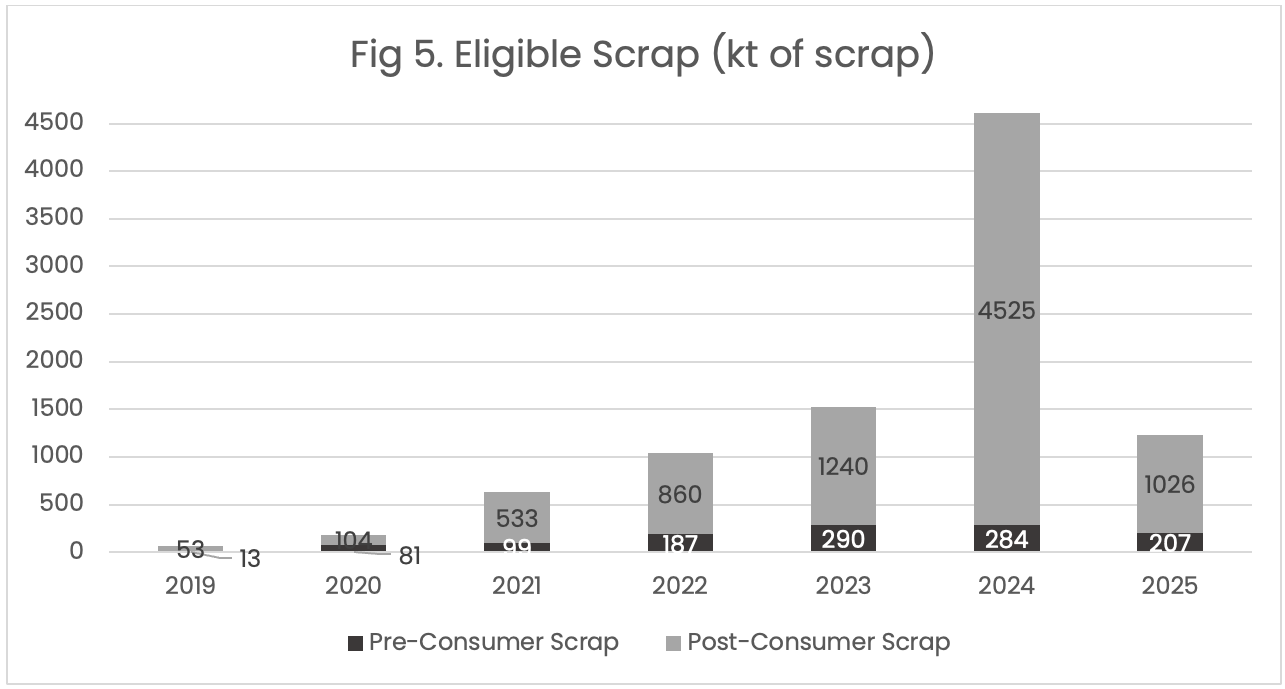
Figure 5: Reported flows of both Pre-Consumer and Post-Consumer Eligible Scrap decreased in 2025.
Manufactured Goods
ASI Aluminium flows into manufactured goods also decreased in 2025 was 1145 kt, after increasing from 555 kt in 2023 to 1,547 kt in 2024. In 2025, ASI Aluminium represented approximately 1% of the aluminium used in manufactured goods globally, compared with 2% in 2024.
The decline highlights the continuing gap between the availability of CoC Material upstream and its uptake further along the value chain. While the number of downstream CoC Certified Entities continues to grow (12 new certifications in 2025), certification itself does not necessarily mean that an Entity will immediately source volumes of CoC Material.
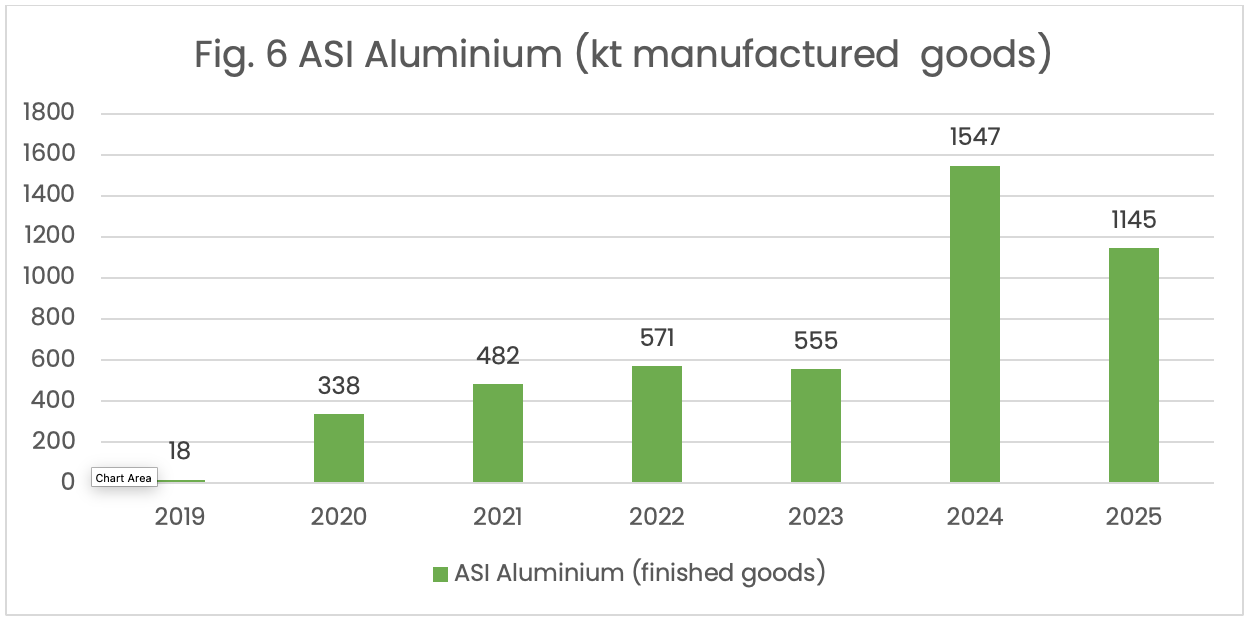
Figure 6: ASI Aluminium flows into manufactured goods decreased in 2025 following the substantial increase recorded in 2024.
Conclusion
The 2025 data show that growth in the number of CoC Certified Entities does not necessarily translate into growth of CoC Material flows. While the number of CoC Certified Entities continued to increase, reported flows of primary aluminium, Eligible Scrap and ASI Aluminium in manufactured goods decreased in 2025. ASI Alumina flows also continued their longer-term decline from their 2021 peak, while bauxite volumes remained broadly stable.
Entity-level sourcing provides further insight into this relationship. More than half (57%) of reporting Entities sourced ASI Material equivalent to 10% or less of their certification scope, including 45% that reported no ASI Material input. Low uptake is not confined to recently certified Entities: one third of all reporting Entities were certified before 2025 but reported no ASI Material input in 2025. At the same time, some Entities sourced ASI Material at levels approaching or reaching 100% of their certification scope.
Taken together, the data show an expanding CoC-certified network in which the use of CoC Material varies considerably. Growth in certification has therefore not been matched by comparable growth in material uptake, and available upstream supply continues to exceed demand further downstream.
Understanding what drives or constrains Certified Entities’ sourcing and use of CoC Material is important to increasing material flows through the system. The 2025 findings provide an important evidence base for considering adjustments to the CoC programme and Standard as ASI undertakes its current Standards revision.
*We sincerely thank the International Aluminium Institute (IAI) for its collaboration and support, and all 114 reporting ASI CoC Certified Entities for their positive engagement with this work.
For more information on ASI CoC Material Flows, contact Klaudia Michalska.
SHARE THIS ARTICLE