Restoring, protecting, improving, building capacity: ASI and its Members’ Nature-Positive Impact
ASI’s work in the nature space is helping drive measurable action across the aluminium value chain.
27 April 2026
ASI’s work in the nature space is helping drive measurable action across the aluminium value chain, with certified entities increasingly embedding biodiversity into operational decision-making. An analysis of 50 ASI-certified entities conforming with Criterion 8.2 (Biodiversity Management) shows that biodiversity action plans are being implemented with clear, time-bound targets, grounded in site-specific risks and materiality assessments.
In practice, these actions span habitat protection and restoration, species management, invasive species control and pollution reduction – demonstrating a structured application of the mitigation hierarchy. In some cases, this work is strengthened through consultation with Indigenous Peoples and land-connected communities, integrating traditional ecological knowledge into planning and implementation. Across the value chain, ASI members are translating these requirements into tangible, on-the-ground outcomes.
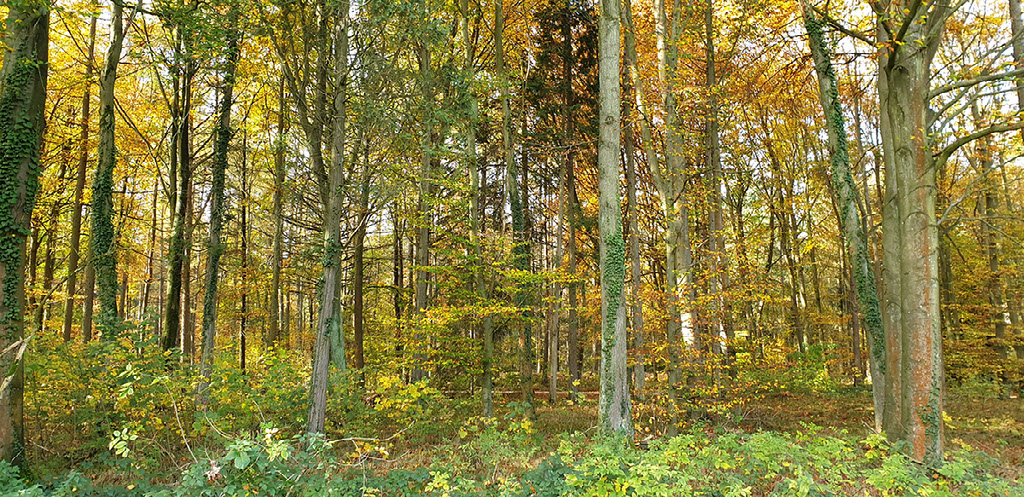
At AMAG Austria Metall AG, ASI certification helped formalise a more systematic approach to biodiversity management at its Ranshofen site, which borders the 183-hectare Lachforst forest. Through a Biodiversity Action Plan, the company restored areas affected by ash dieback using diverse native species and established wildflower corridors to support pollinators – improving habitats for birds, mammals and insects. As Helmut Kaufmann, COO, notes:
“The preparation for the ASI certification created a lot of awareness of sustainability among our workforce… it made our people reflect in-depth on sustainability and their work environment.”
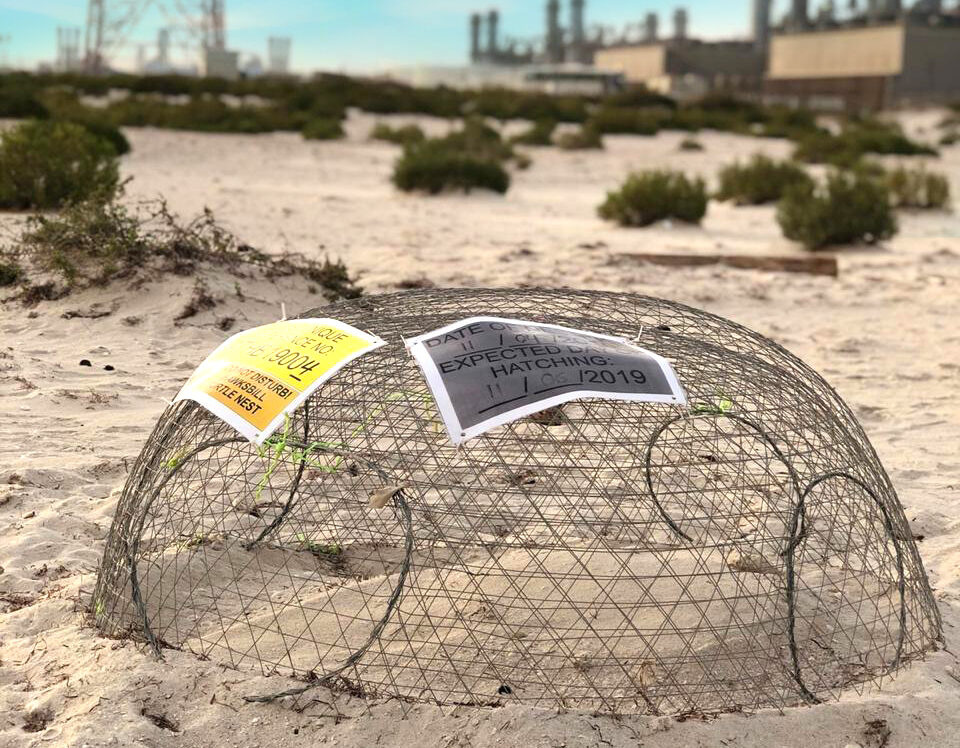
At Emirates Global Aluminium, ASI certification supported the formalisation of long-standing conservation efforts for the critically endangered Hawksbill turtle at its Al Taweelah site. Building on existing initiatives, the company developed a Biodiversity Action Plan to structure monitoring, protection and continuous improvement efforts. Since 2011, nearly 100 turtles have nested along the shoreline near the facility, with thousands of hatchlings reaching the sea. As Jasminka Jaksic, Sustainability Manager, explains:
“Hawksbill turtles return to nest beside our Al Taweelah smelter year after year. Through dedicated nest protection, beach clean-ups by our employee volunteers, and turtle rescues, our work has supported the release of more than 7,600 hatchlings to the ocean since 2011. It is proof that industrial operations and biodiversity stewardship can co-exist when the commitment is sustained.”
At Mineração Rio do Norte (MRN), operating in the Amazon, ASI certification has helped shift from more informal approaches to a structured, system-wide integration of environmental management, including biodiversity and land rehabilitation. Through strengthened governance, enhanced monitoring and integration into its management systems, MRN has improved controls across emissions, water, and ecosystem impacts – supporting more resilient operations in a highly sensitive environment. As Wvagno Ferreira da Silva, General Manager Performance and Risk Management, explains:
“The Certification process provided an opportunity for us to take a step back, reflect on our practices, and clarify our approach… moving beyond our historically informal processes.”

For downstream companies like Crown Holdings Inc., ASI is helping to extend biodiversity considerations beyond site-level impacts into supply chain due diligence and corporate strategy. Through its alignment with the ASI Standards, Crown has introduced biodiversity as a new area of focus, developed robust biodiversity plans, conducted both desktop and on-the-ground assessments, and embedded mitigation strategies into its operations. As Sandrine DUQUERROY‑DELESALLE, Vice President Global Sustainability, Regulatory & External Affairs, notes:
“ASI has provided valuable insights into our operations, helping us take a more structured and informed approach to key sustainability topics. This has strengthened cross-functional collaboration and supported the integration of biodiversity alongside other priorities such as climate, water and human rights”

Beyond certification, ASI has also advanced collaborative projects that connect biodiversity outcomes with livelihoods and long-term stewardship. Through a project with the Indigenous Peoples Advisory Forum, supported by an ISEAL Innovation Grant, ASI developed and delivered practical training on bauxite mine rehabilitation in partnership with Indigenous Peoples and land-connected communities. Delivered at the Gulkula Mining Company, the initiative focused on building capacity in rehabilitation planning, monitoring and post-mining land use – combining technical approaches with traditional knowledge. Participants gained hands-on experience and tools to apply in their own regions, supporting more inclusive, locally grounded approaches to biodiversity restoration and strengthening the role of communities as long-term stewards of their lands.
These efforts matter in a context where biodiversity pressures are significant: a large share of bauxite mining occurs in water-stressed regions, and mining-related land impacts can contribute to ecosystem degradation. By providing a robust framework through its Performance Standard, governance processes and nature-positive priority, ASI is helping members move from managing impacts to contributing to improved biodiversity outcomes – supporting more responsible and resilient aluminium production.
RELATED TOPICS:
SHARE THIS ARTICLE