The €25 trillion Value Gap: Rethinking circularity in aluminium
The Circularity Gap Report 2026 estimates that the global economy loses €25 trillion in value every year through linear resource use. For aluminium leaders, this puts a different question on the table: not simply how much material can we recycle, but how much value can we create and keep in circulation?
25 August 2026
For every €3 of economic value created globally, around €1 is lost through linear practices. That is the striking conclusion of the Circularity Gap Report 2026, which introduces the concept of the Value Gap: an initial estimated €25.4 trillion (±€4.7 trillion) in avoidable economic value lost annually through the way resources, products and assets are currently used. This is equivalent to almost 31% of global GDP.
The scale of the number matters. But perhaps more important for business leaders is where that value disappears. The report identifies losses across processing, energy use, end-of-life waste and the premature deterioration of long-lived assets, among other areas. In other words, value is lost long before a material reaches the recycling bin.
This provides a useful reminder for the aluminium sector: Circularity is not another word for recycling. It is a strategy for creating and retaining value.
Aluminium can be recycled. The question is what happens before then
Aluminium’s recyclability is one of its major strengths, and recycling will remain fundamental to a more circular aluminium economy. Recyclability is not the same as value retention, and treating the two as identical starts the conversation at the end of the value chain. Consider how value actually leaks out of an aluminium system well before recycling begins:
- When high-grade metal returns at a lower value: A wrought alloy in a vehicle body or façade panel carries specific, engineered properties. If different alloys are collected and remelted together without adequate sorting, the aluminium may return to a less demanding application. The metal remains in circulation, but some of its functional and economic value may be lost. As demand changes across applications, keeping scrap streams segregated so that aluminium can return to equivalent or high-value uses becomes a commercial question as much as a technical one.
- When recovered material does not return to its highest possible use: Much of the aluminium currently in use is locked into long-life products, while demand for the metal continues to grow. This makes the quality and effectiveness of recovery systems particularly relevant. Contamination, inadequate sorting, material dissipation or loss during collection and processing can all reduce the value that ultimately returns to the system. The circularity question is therefore not simply whether aluminium is collected, but how much of its original value can be retained when it comes back.
- When value is lost in the process itself: Yield losses in fabrication, oxidation and dross in remelting, and poor scrap segregation on the factory floor all erode the value of metal a business has already paid for – before it reaches a customer or a recycler.
- When long-life assets fail early: Much of the world’s aluminium sits in long-life assets such as buildings, vehicles and infrastructure, where premature deterioration can mean value is lost well before the material itself reaches end of life. A component that could have lasted longer, been maintained, or been designed for reuse and disassembly represents value forgone long before any material is recovered.
What these examples share is that none can be solved by recycling alone. Each is a decision made somewhere upstream, in design, in sorting, in the business model, in a company’s investment decisions, and each involves a different actor at a different point in the lifecycle. Retaining value therefore isn’t a single fix; it requires seeing how those choices connect.
The ASI Circularity Framework
That is why ASI approached circularity as a framework rather than a metric. Introduced in 2023, the ASI Circularity Framework looks across five connected dimensions: the stage of the aluminium lifecycle; the role an organisation can play in driving change; the range of circularity strategies available; circular business models; and the metrics used to understand progress.
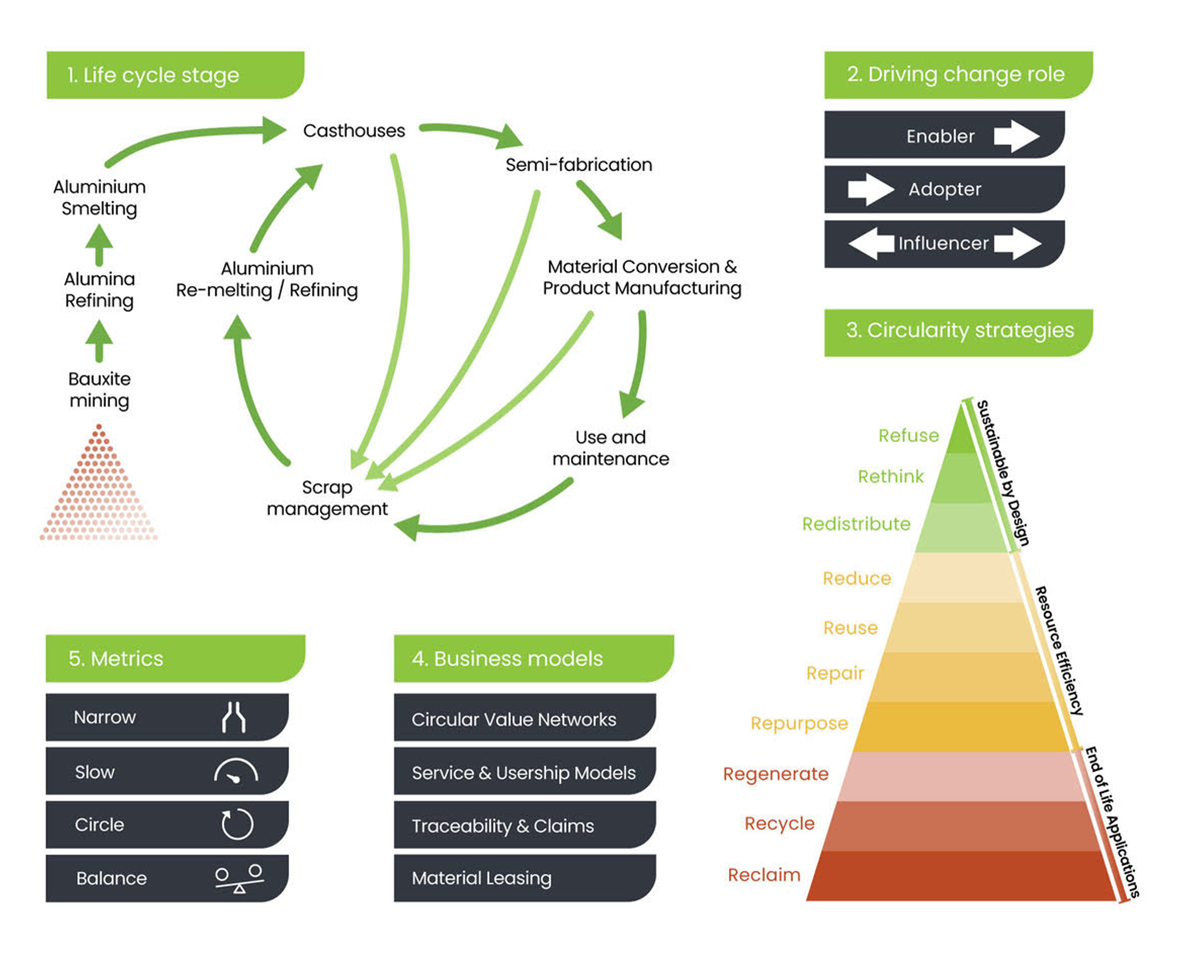
Figure 1. ASI's Circularity Framework, launched in 2023
The hierarchy of circularity strategies helps put those choices into perspective. Recycling and material recovery have a clear role, but they are only part of a much wider set of options, often described as the R-strategies, including rethinking resource use, reducing material demand, redistribution, reuse, repair and repurposing. The objective is not simply to close a loop but to preserve the greatest possible value within that loop for as long as possible.
From a sustainability metric to a business question: Four circularity questions for the boardroom
Seen through this lens, circularity becomes relevant well beyond sustainability teams. For a business leader, the questions start to look different:
1. Where is value leaking out of our business, and are we treating those losses as inevitable? Material yield losses, products reaching end of life prematurely, poor scrap segregation, underused assets and materials that return only to lower-value applications can all represent value that the business has already paid to create.
2. Are we designing for the scrap pile, or for the next life of the product and material? Decisions made at the design stage can determine whether products last longer, can be repaired or disassembled, whether components can be reused, and whether aluminium can return without unnecessarily losing alloy or functional value.
3. Are we simply participating in the value chain, or helping shape the conditions for circularity? A company may be an adopter, an enabler or an influencer. Procurement requirements, product specifications, infrastructure investment, partnerships and engagement with policymakers can determine whether circular solutions become commercially viable beyond the boundaries of a single business.
4. Are we measuring circularity, or just counting tonnes? Recycling rates and recycled-content figures matter, but on their own they do not tell management where value is being destroyed, which interventions offer the greatest return, or where the next investment should go.
These are increasingly questions of competitiveness, resilience and resource productivity, not simply environmental performance. And they cannot always be answered by one company acting alone. Aluminium moves through mining, refining, smelting, remelting, fabrication, manufacturing, use, collection, sorting and recycling, often crossing organisational, geographic and regulatory boundaries several times. Retaining value therefore requires coordination across the value network, supported by enabling policy and regulatory conditions.
Value is not only financial
Not every form of value in a circular system appears on a balance sheet. Recovery systems depend on people: the collection, sorting, sourcing and formalisation decisions that determine whether material re-enters the loop are also decisions that affect human rights, working conditions and livelihoods, including those of waste pickers and other workers who perform a critical role at the first mile of recycling, often in the informal economy.
For ASI Members, this is also a risk question. Responsible circularity means understanding and managing risks to people alongside risks to the business. As recycling systems formalise, poor working conditions, exclusion of informal workers or disruption of livelihoods can create human-rights risks and undermine the resilience (and potentially the licence to operate) of the recovery systems companies depend on. A value-retention strategy that improves recovery while eroding the livelihoods it depends on is neither responsible nor durable.
Responsible circularity therefore adds a second set of questions alongside the economic ones: who participates in the value created, who benefits from it, and who carries the risks and costs of the transition? Retaining material and economic value should not come at the expense of the people and communities that make circular systems possible.
A common language is becoming increasingly important
One of the challenges is that circularity can mean very different things to different organisations. For some, it means recycled content. For others, waste reduction, recycling rates, product design, reverse logistics or new business models. All may contribute, but without a common understanding it becomes difficult to set strategies, allocate capital or compare progress.
This is one reason international frameworks are evolving quickly. The ISO 59000 family of standards provides common principles, terminology, business-model guidance and approaches for measuring circularity. ASI has developed a dedicated educationAL training module to help aluminium value-chain actors understand these concepts and consider how they can be applied in practice.
The landscape is continuing to mature. ISO is now developing ISO 59001, a Circular Economy Management Systems standard, while the Global Circularity Protocol for Business provides a framework for measuring, managing and communicating business circularity.. Together, these developments point in the same direction: circularity is moving from a broad ambition towards a more structured management discipline.
Retaining value before it is lost
An economy can create more output while simultaneously losing enormous amounts of value through inefficiency, premature disposal and poor utilisation of resources. Circularity asks us to look at both sides of that equation. For aluminium companies, that does not diminish the importance of recycling. It makes the opportunity bigger.
The goal should not only be to recover aluminium once value has been lost elsewhere in the system. It should also be to design products, operations, value networks and business models that prevent unnecessary value loss in the first place — and recover the highest possible value when materials eventually do return.
For business leaders, perhaps the most useful circularity question is therefore not: “How much do we recycle?” but “Where are we losing value, and what would it take to keep more of it in circulation?” And increasingly, there is a second question alongside it: “Who shares in that value?”. Those are much broader questions. And they are where circularity starts becoming a business strategy.
Explore further
Explore ASI’s Circularity Hub for the latest articles, publications and research on circularity across the aluminium value chain; deepen your understanding through the elementAL module on the ISO 59000 family of circular economy standards; visit the ASI Standards Revision Hub for the latest developments on how circularity is being considered within the revision of the ASI Standards; and explore opportunities to join collaborative projects such as CARE, which brings value-chain actors together to test practical approaches to responsible and inclusive recycling.
RELATED TOPICS:
SHARE THIS ARTICLE