Field Notes: ASI Witness Assessment at Baphlimali Bauxite Mine, Odisha, India
In January 2026, ASI’s CEO, Dr Fiona Solomon and Director of Research and IPAF Adviser, Adjunct Associate Professor Mark Annandale, carried out a witness assessment of the first Certification audit of the largest bauxite mine in India.
26 May 2026
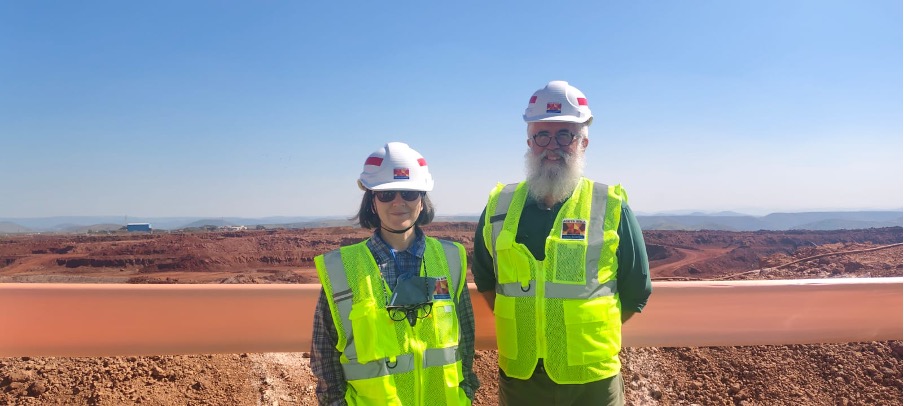
Fiona and Mark at Baphlimali Bauxite Mines in January 2026
Who we are
For the last 30 years, both of us have been actively working in and around the mining industry. In our work at ASI, we share a strong personal commitment to catalysing positive impact on the ground, including through ASI’s Indigenous Peoples Advisory Forum (IPAF). Over the last decade, we’ve worked to build strong IPAF engagement and networks in Adivasi (Indigenous) community and academia, some of whom are now directly providing training on issues such as FPIC to ASI members.
Context in India
In ASI’s strategy, India is identified as an important region for the aluminium value chain, and one where we believe that we can make a difference through our work. India has 3 billion tons of bauxite resources, with 70% of these concentrated in the Eastern Ghats (Odisha and Andhra Pradesh) where this mine is located. This bauxite also feeds into further domestic primary production (refineries, smelters) and downstream industries in the region.
India has pioneering legislation on direct corporate support for social development. India’s mandatory CSR initiative, established under the Companies Act of 2013, requires applicable companies to spend at least 2% of their average net profits from the previous three years on CSR activities. A recent India Supreme Court judgment stated that corporate CSR investments need to increasingly prioritise environment, biodiversity, and climate action, not just social welfare activities.
Context for the ASI audit
The Delhi-headquartered audit firm CETIZION Verifica is active in ASI audits, and also accredited for the Pharmaceutical Supply Chain Initiative, EcoVadis, the Carbon Disclosure Project and the LME Responsible Sourcing Program (Track B). They were the first audit firm to work with ASI on normalising IPAF member participation in audit teams as respected knowledge holders.
The Baphlimali Bauxite Mines are managed by Utkal Alumina International Limited, a 100 per cent subsidiary of Hindalco Industries Limited, and part of the Aditya Birla Group. Utkal Alumina are one of now 12 Hindalco/Aditya Birla members of ASI in India, who collectively express strong interest in implementing ASI’s standards and broader commitment to delivering long-term sustainability outcomes.
ASI’s Witness Assessment program enables the direct in-person observation of audit teams undertaking initial certification audits, surveillance audits and re-certification audits across the ASI Membership. They offer an ideal opportunity for ASI to observe auditors ‘in action’ and to identify potential improvement opportunities with their approach, and internally with respect to the overall program. It is important to note that witness assessments are not shadow audits – they do not assess the performance of the Entity or make recommendations on conformance to the ASI Performance Standard.
Highlights
Fiona
Although I have been to many mining operations, there was so much that was refreshingly novel and uplifting at Baphlimali. It is difficult to condense the experience into a few highlights, but they include the following.
The first was a “street play” approach to Health and Safety training for truck drivers, which we happened to be going past and stopped to watch. Sidestepping language and literacy barriers, this vivid role play of driver, helper, Mum and Dad used humour to act out safety risks (such as lack of sleep, long drives without a break or sustenance, being on your phone, alcohol, etc). Then the ‘fatality’ happened, with emotional parental grieving. Drivers watching were gripped and filming on their phones. I have never seen such a powerful safety message so effectively delivered; I still tear up a bit even thinking back to it. This team regularly devise and enact tailored dramas like this for all work teams around the site. Simply unforgettable and an approach that would be great to see more of.
The second was a visible and documented human resources culture that fronts ‘empathy’, ‘searching’, ‘care-fronting’ and ‘(co)advising’. At a mine. In signs on all senior managers desks. And in the tangible way those managers engaged with everyone on this basis and supported a positive working environment. This is part of a company-wide program that has been running for more than a decade now, and was meaningful for younger employees, too, in their telling. It really resonated with me as many aspects aligned with the culture work we do within the ASI Secretariat.
From a witness perspective, this was an exemplary audit process. A professional and focused audit team that brought together significant management systems audit experience with traditional and cultural knowledge from the region. A site management team that had thoroughly prepared and welcomed feedback of any kind.
I greatly appreciated the ‘radical transparency’ of senior management – there was no hesitation in showing us any part of the operation and we had the opportunity to spend time with a wide range of employees and have very open discussions. Personally, the warm welcome of all the people we met within the company and local communities will stay with me for a long time.
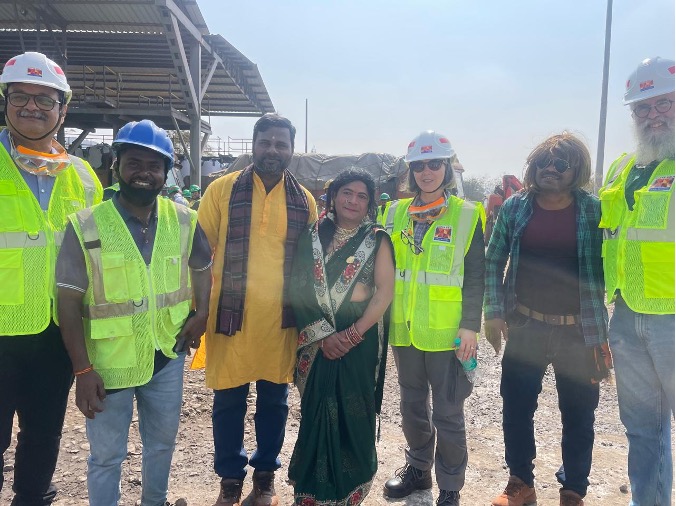
L-R: Rabi Mishra, Unit Head Utkal Alumina, 4 Health and Safety team members who gave an emotionally engaging performance on risks for around 80 truck drivers; Fiona Solomon, ASI (3rd from right); Mark Annadale, ASI (right)
Mark
The highlights of the audit included the long term vision, the corporate culture to improving operations and including the local communities. After visiting mines in various parts of the world over many years it was clear to see the commitment of the staff at the Baphlimali mine, both long term employees and more recent graduates all confirming the supportive corporate culture, starting with the company leadership that has ownership at all levels of the organisation. This positive and supportive culture is then reflected in how people are in the workplace.
I enjoyed the discussions with staff about the mine rehabilitation programs, an area I have worked in for nearly 30 years. It was great to see the efforts of trialling and testing new ideas to both protect the environmental values while providing for potential livelihoods after mining in support of local communities. As someone who enjoys coffee, it was good to see the healthy coffee plants in the mine rehabilitation, protected by the shade trees that can also be used for habitat for local wildlife, future construction in the villages and protection of the coffee plants and the soil. The other environmental initiatives, such as biodiversity management, aim to build the baseline knowledge and consider how to ensure that plant and animal species there before mining are included in the management of the site, as well as in the mine rehabilitation areas, to maximise the biodiversity outcomes even after impacts from mining operations.
Some of the offsite initiatives in support of local communities, such as health care facilities, small business development for women, infrastructure and improvement of local community farm production provided examples of leading practice initiatives. This trip enabled us to learn much from the Baphlimali mine operations.
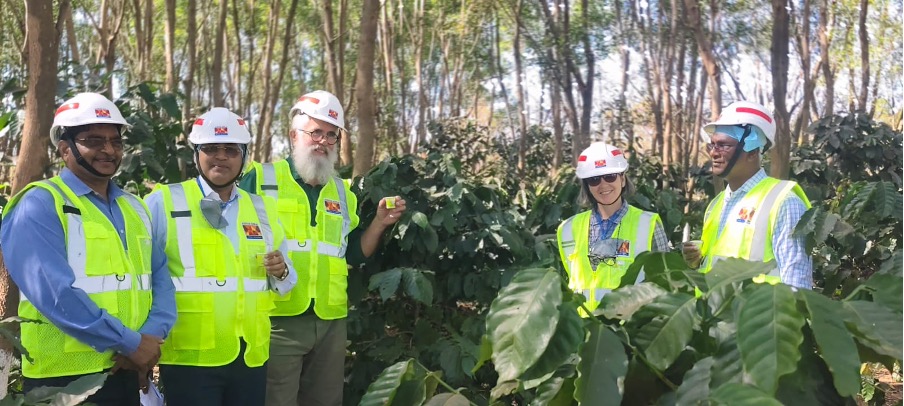
Coffee plantation established on post-mining land at Baphlimali. L-R: Vijay Chauhan, Head Baphlimali Bauxite Mines; Gangaa C Sharma, Lead Auditor, Cetizion Verifica; Mark Annandale, ASI; Fiona Solomon, ASI; Nicholas Barla, Audit Team and IPAF member.
SHARE THIS ARTICLE